
The Paradox: Limiting Features Is a Feature
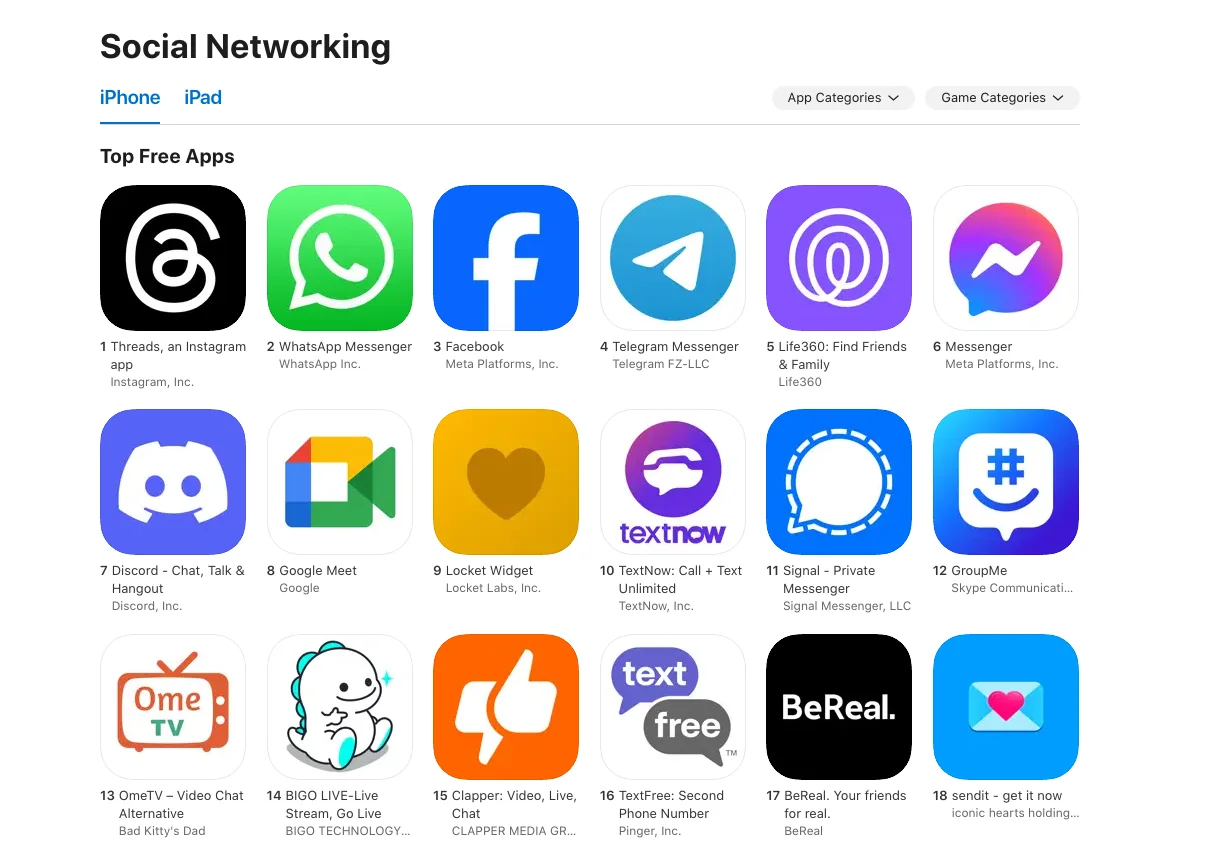
On April 29, 2023, the App Store's Top Social Networking chart in the United States looked quite interesting.
Lately I've seen many young people obsessing over Locket. After taking a closer look, I realized something that felt surprisingly paradoxical: limiting features can actually be a feature.
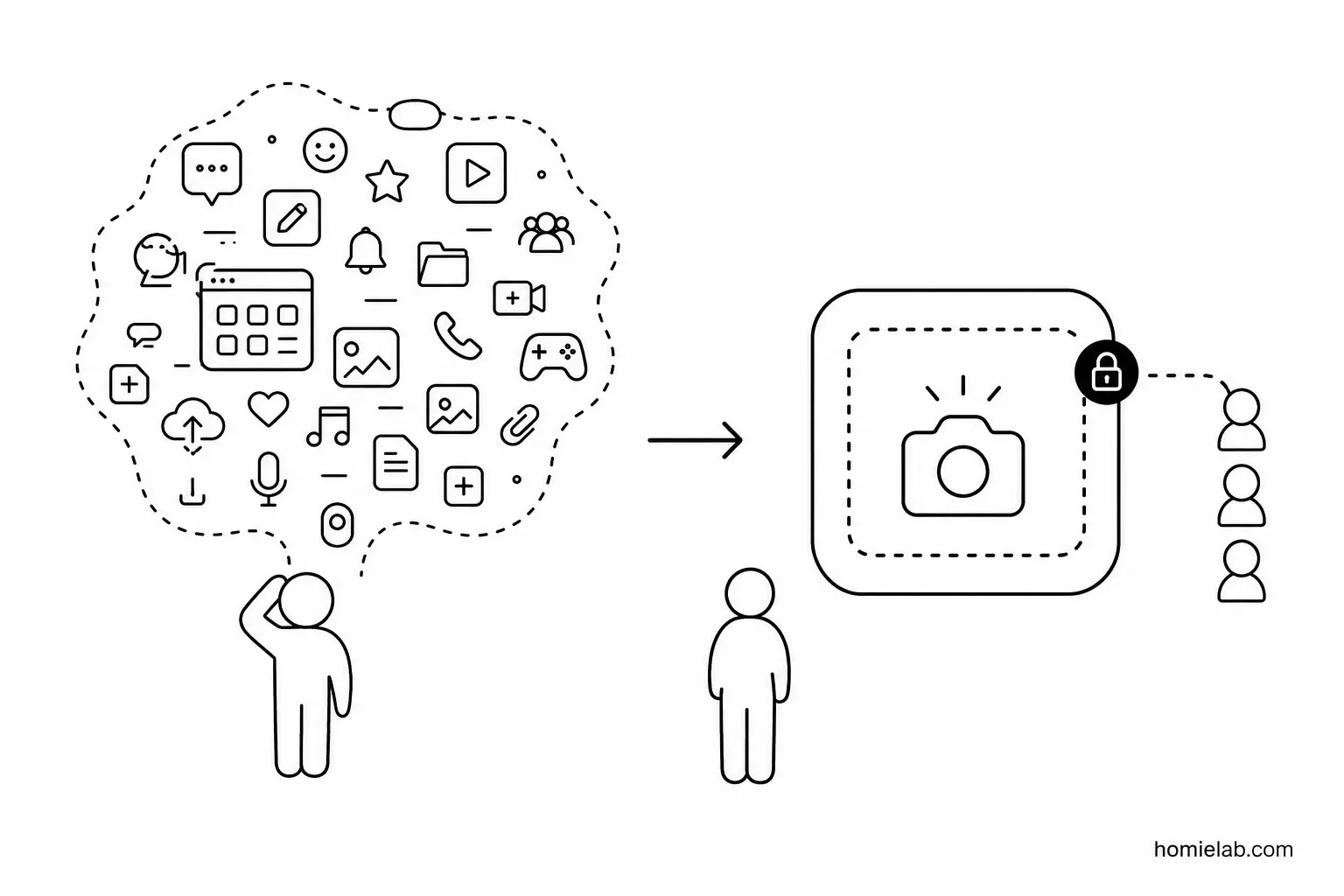
Most online services evolve toward becoming super apps. They continuously add more and more features to serve every possible audience, believing that more users inevitably lead to more revenue. It seems like the larger these platforms become, the less room there is for newcomers.
Yet somehow, simple ideas created by younger developers-products that sound almost too minimal to be interesting-still manage to attract millions of users.
There was once a golden era when a handful of internet companies dominated almost everyone's online life:
- Yahoo Messenger: The world's most popular messaging app, packed with features like emojis, Buzz window shaking, doodling, custom fonts, virtual kisses, photo and file sharing, voice and video calls, games, and much more. Even today, many messaging apps still can't match Yahoo Messenger feature-for-feature.
- Yahoo! 360° and MySpace: Highly customizable themes, deep personalization, long-form posts, unlimited friend connections, and complete freedom to express yourself.
- Flickr and Photobucket: High-quality photo hosting with original-resolution uploads, making them the go-to platforms for photographers.
Ironically, despite all those powerful capabilities, they eventually declined and were replaced by platforms that intentionally limited what users could do:
- Facebook: Initially little more than a profile page with basic personal information, and only available to university students.
- Twitter: Limited every post to just 140 characters.
- Instagram: Allowed only square photos with built-in filters and relatively low image quality.
After watching Yahoo fall, Facebook learned that simply adding features wasn't enough. It aggressively expanded its ecosystem by acquiring or copying competitors. The goal became simple: whatever users wanted, Facebook should already have it.
And yet younger generations kept migrating to new social platforms.
- Snapchat: Focused almost entirely on taking and sharing photos that disappeared after 24 hours. Posts weren't permanently stored, reducing both clutter and storage costs. → Facebook couldn't acquire Snapchat, so it recreated the idea as Stories.
- TikTok: Originally limited videos to just 15 seconds-an incredibly restrictive format compared to Facebook Video. → Facebook responded with Reels.
- Locket: Lets users share only real-time photos, with no filters, no editing, and a limit of just 20 friends. → Facebook once acquired Instagram. Perhaps one day it'll try to buy Locket too.
- Airbuds: Automatically shares the music you're currently listening to, similar to Spotify's activity feed. There's almost nothing to manage because it updates itself. → Facebook later introduced music sharing through Notes.
These newer "micro social networks" are, quite literally, built around a single feature.
In reality, older social platforms were technically capable of doing all of these things already. The difference is that these newer products intentionally removed almost everything else and introduced meaningful constraints.
And somehow, those constraints became their greatest strength.
Sometimes, limitation creates focus.
In a world overflowing with choices, products that deliberately do less can help us pay more attention to what truly matters.