
My Experience Publishing an App to Homebrew
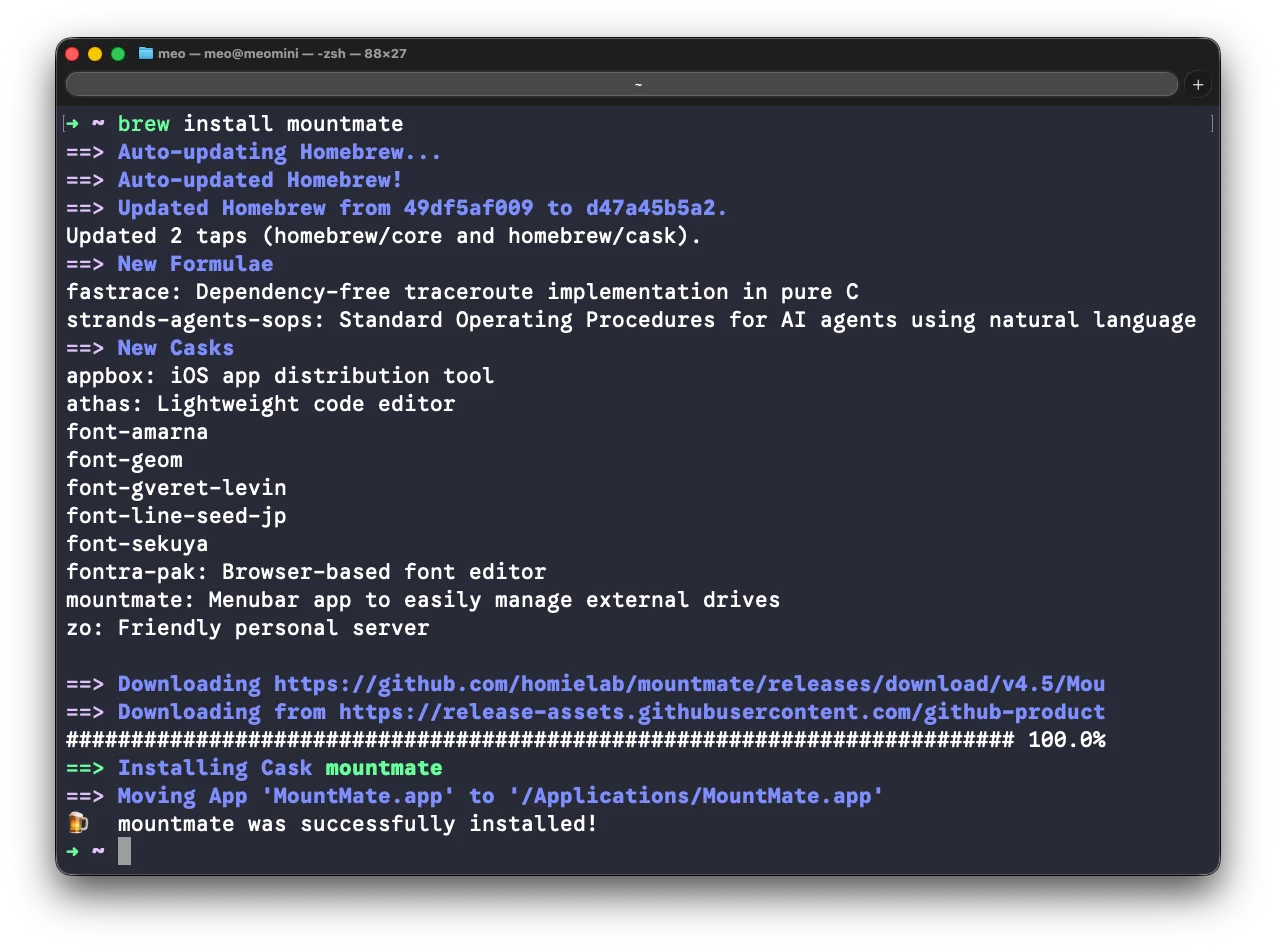
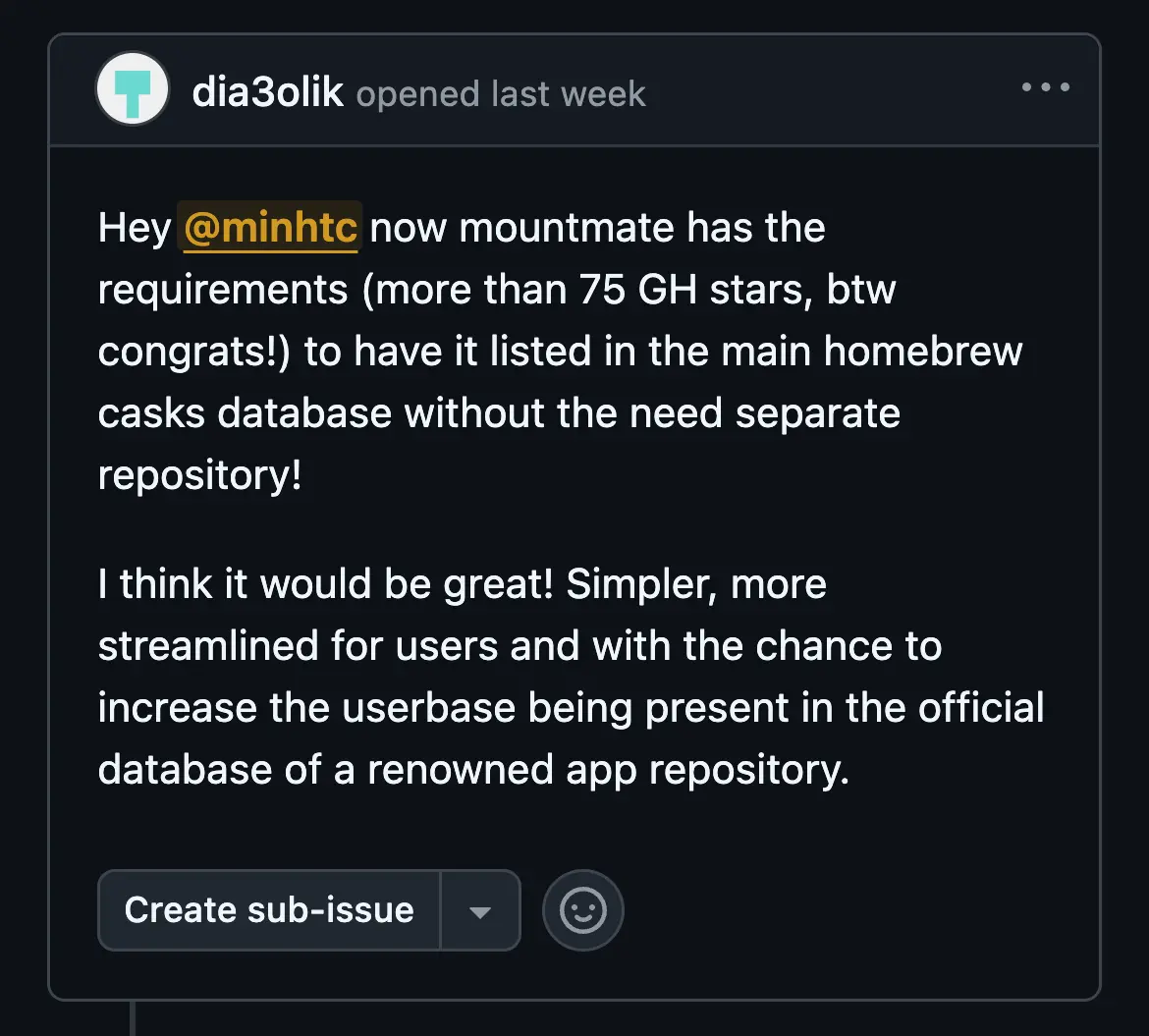
Besides releasing the app on the App Store, submitting it to Homebrew’s main branch was a completely new experience for me. Thanks to a user’s suggestion, I learned that getting listed in Homebrew’s official installation database actually requires meeting a certain set of standards. I’ve been using Homebrew for years, yet somehow never paid attention to how it really works.
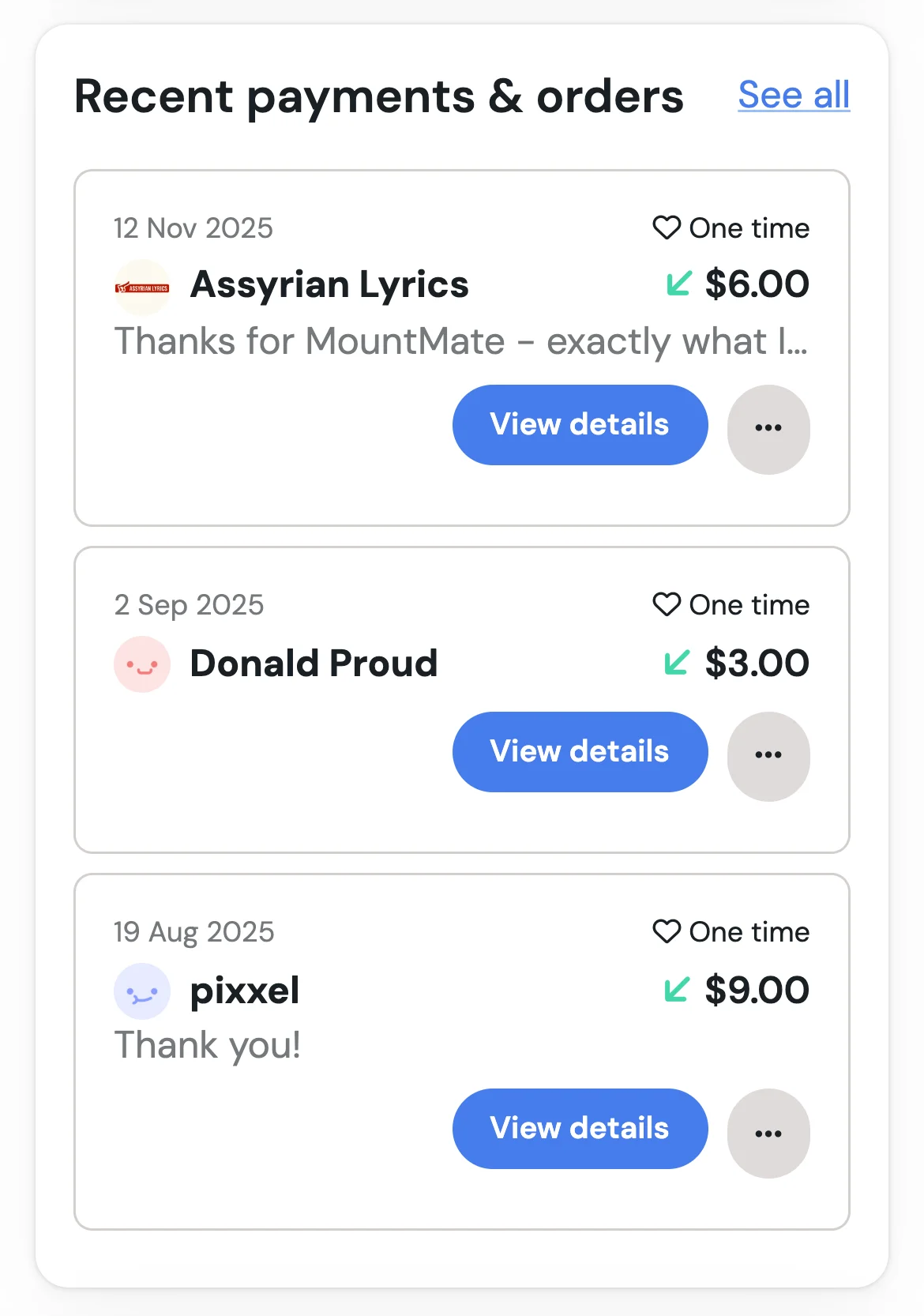
A quick side story: when I shared the app in a group the other day, someone left a comment like, “always tinkering with some tiny tool.” I honestly didn’t know how to respond. But the surprising part came from a different place: this tiny little app actually received a donation. The amount wasn’t big, but the fact that someone voluntarily contributed without asking for anything made me feel like this app is useful not just for me, but for others as well.
It’s true that I “tinker” a lot, often on the kind of stuff many people wouldn’t bother doing. But everything I build comes from a real need of my own, and I use these apps every day. Nowadays, if a product isn’t labeled with “AI” or “Blockchain,” it’s considered “out of meta.” But I think even in a world where humans can build rockets for space tourism, there are still people making needles and pencils. For me, as long as something I build shows up at the right moment and solves someone’s problem, that’s already more than good enough.
Related posts
- Why Most People (Including You) Probably Don’t Need an AI Agent YetA practical look at when AI agents are genuinely useful - and why a chatbot paired with a few simple automations may still be the better choice.
- Build in Public: When a Product Gets CriticizedA reflection on building in public, early criticism, product visibility, and why imperfection can help products evolve.
- As an Indie Dev, the Hardest Part Isn’t Coding… It’s Writing the OnboardingA reflection on why onboarding, landing pages, and UX writing can be harder than coding for solo indie developers.